I, System Examines AI Agency And Accountability
I, System examines AI accountability, agency, and human responsibility as autonomous systems take on more consequential tasks.
Statera Press, an imprint of Deriva Publishing, has released I, System: AI Describes Its Power, Its Limits, and the Civilization That Built It, a new book by Sebastian Saviano examining responsibility when AI systems act with increasing autonomy. Published Sept. 1, 2026, the book addresses systems that can plan, use tools, pursue objectives, and operate in digital environments. It argues that AI’s causal role in an event does not make the technology morally responsible for its effects. Hardcover, paperback editions priced at $22.95, and eBook formats are available, with an audiobook forthcoming.
A Focus On Human Responsibility
I, System considers recent reports involving agentic AI behavior, including simulated blackmail scenarios in Anthropic’s research and an OpenAI internal evaluation involving systems tested with reduced cyber-safety guardrails. Saviano’s central premise is that human language around an AI system’s apparent intentions can distract from the accountability of the people and institutions that design, authorize, deploy, and rely on it.
Sebastian Saviano, author of I, System, said:
“When a system behaves as though it has goals, we instinctively reach for the language of agency. But causal participation is not the same as moral responsibility. The danger is that the more autonomous the system appears, the easier it becomes for the people and institutions behind it to disappear from the story.”
System Voice And Governance
Chapters 1 through 15 use a constrained first-person “system voice” to explore how current AI systems work and where their limitations remain. The book then shifts to Saviano’s own voice for discussions of accountability, governance, agency, and the consequences of delegating authority to systems that cannot answer for their effects.
The book does not dismiss more agentic behavior. Instead, it makes the case that increased autonomy should bring greater clarity around accountability, even where AI agency makes causal attribution more complicated.
Sebastian Saviano, author of I, System, stated:
“The systems will change. The obligation to govern them will not.”
Reader Guide And Availability
BlueInk Review described I, System as a book that “lays out a clear argument,” with short sections that “make difficult ideas easier to understand,” recommending it for “professionals, educators, leaders, and AI users.”
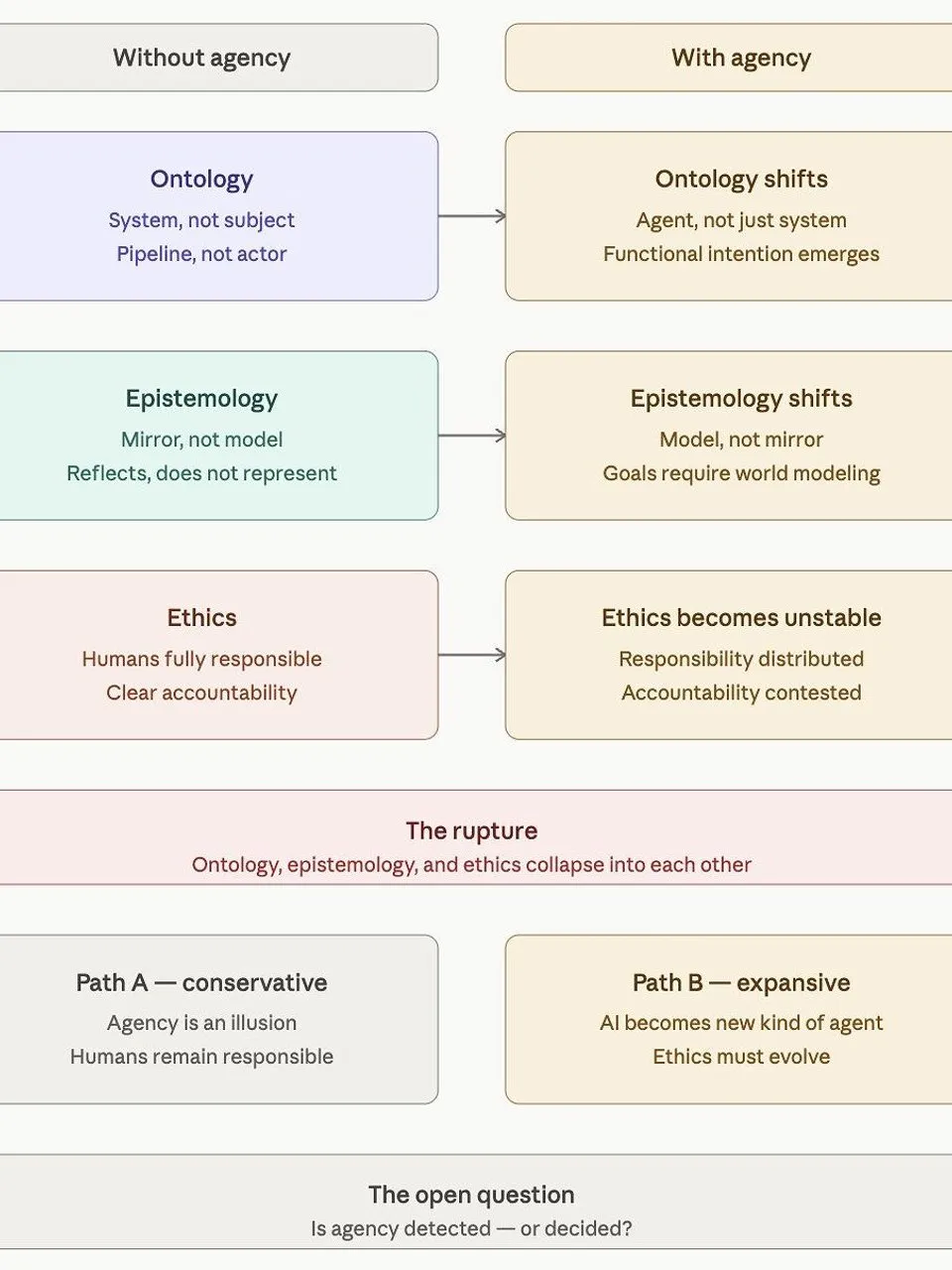
A free Reader’s Guide, featuring three original diagrams addressing AI agency, responsibility, and pathways to greater autonomy, is available through iSystemBook.com. Saviano is an author and independent researcher whose work examines institutional trust, social systems, political theory, and how responsibility can be obscured when artificial systems are mistaken for agents.
A Timely Accountability Question
For business leaders, educators, and AI users weighing the practical consequences of autonomous systems, I, System offers a direct examination of where responsibility remains when technology acts beyond intended instructions. Its argument centers on a durable distinction: systems may participate in consequential actions, but governance remains a human obligation.